Tag Archives: technology

Building an Infographic? Begin with a Blueprint.

infographic data

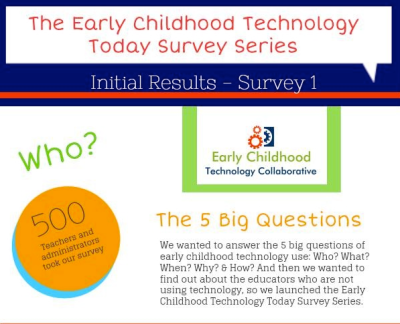
Recently, I had the chance to design and create my first infographic for some survey data collected on technology use in early childhood education. I was excited by the opportunity because it presented a new challenge and the chance to expand my tech skills in a new area.

I began, as I often do, with research. I reviewed some of my favorite infographics that I have saved on Pinterest to get a feel for what I was  looking for in my design. Then, I did a few Google searches to see what the top hits were for “creating infographics,” “designing your own infographic” and similar keywords. I was surprised at how old many of the top hits were, especially with sites like visua.ly recently launching their “create” function.

Still, after some digging I was able to find some good resources. There are a number of different sites that can help you create your own infographic. They vary in price and functionality and since I wasn’t interested in the $2,500 starting price for a custom infographic at visual.ly and needed to do more than pull data from Twitter or Facebook, I searched for other tools. I found infogr.am, which lets you choose from a few templates and then upload or add your data but there wasn’t an easy way to add my own icons, which was important for my design plan. Next, I discovered Piktochart and found that I could have a lot of flexibility with the colors, fonts, icons, and charts I used, even with their free service. Another platform, easl.ly, looks like it could also be promising but it’s still in beta and I found it after I had made my infographic and had some trouble with it freezing. Finally, this post on creating infographics just came out on 6/12 and has a number of additional resources.

Since I knew I wanted customized icons to clearly represent my data, I chose Picktochart as my platform and began to explore what was possible with the site and how to arrange my data. I quickly discovered that before I could make progress with my digital infographic, I needed to revert to old-fashioned pen and paper and sketch out a blueprint of my idea. In order for the content to be organized and flow methodically, I had to work out the connections between each piece of data and which ones were best displayed via a graph versus icons versus text. Ultimately, I used the key questions of: Who?, What?, When?, How?, and Why? (and why not?) to structure the flow of the data. Then after outlining everything on paper, I returned to Piktochart to put my blueprint into a digital format.

I adjusted the theme colors and fonts and then began searching Icon Archive for symbols that would represent my data (e.g., a smartphone). You can upload a maximum of 5 images under 1 MB using the free version of Piktochart and I have to say that when I ran into trouble deleting images (the trick is to delete them under Manage Uploads), their customer support was very responsive and helpful! After adding all of my icons and creating a systematic way of presenting each of my big questions, I reviewed my infographic in its entirety and asked a few colleagues to check it over. A second pair of eyes is always helpful to make sure the information will flow and make sense to another audience.

After that, I downloaded my infographic as an image (if you have the paid version you can also download the HTML) and now it’s ready for the world to see! You can find a small clip of it below and the full version is available on ecetech.net.
infographic

Taking Time Between Your Timelines – Because #YouMatter

Pocket watch, savonette-type. Italiano: Orolog...

Pocket watch (Photo credit: Wikipedia)

It’s that time again, time for one timeline to end and another to begin. We’ve all experienced these transitions, probably over and over throughout life but this time, I want to pause.

I want to take time between the ending of one timeline and the beginning of another to reflect on all that I’ve experienced, accomplished, learned, and shared.

Just a few weeks ago, the timeline of my master’s program came to an end and with it, the even longer timeline of my formal education (for now!). With that ending, came the end of my timeline living in Washington D.C. and the beginning of a new timeline in Philadelphia. In parallel to those timelines, I have been adding experiences and learnings to my professional consulting timeline, which has become the main frame for my work in Philly. And of course within each timeline are smaller timelines, such as Capstone projects or trips to Senegal, and when I stop to think about it, there is truly a lot of change, growth, and learning happening simultaneously in one’s life!

With that in mind, stopping to think and to reflect is exactly what I want to do. It’s so easy for one timeline to fade into the next. For me, transitioning from college to work to graduate school was almost seamless. There was not time (I thought) to pause and celebrate what I had done, consider the change I had created through various campus projects or to record hopes and goals for moving forward during the actual transitions. I often take time throughout my timelines to plan in advance, reflect on my experiences, and think deeply about larger professional goals, which has helped me bring together my various experiences and studies in early childhood, global education, and educational technology in a meaningful way. Yet rarely have I allowed, in addition to that planning and goal-setting, a bit of time for myself between transitions. Now, with the end of another academic timeline and the beginning of new professional experiences, I want to make the time to consider where I’ve been, where I am, and where I’m going next. I want to carve out time that in the past I have allowed to be so easily eaten up by other priorities (because doesn’t it seem like there’s always another task to finish, bill to pay, or idea to explore?).

Especially in our connected society, I succumb to the pressure to constantly check my email, chat with my Twitter PLN, finish that lingering project and then start a new one because it’s sitting there on my to-do list or popping up in my browser and I don’t want to fall behind. But what if we all take time to put that aside for a little bit and just think about why we matter, about what we’ve done and where we’re going next? As Angela Maiers says, You Matter, and by “mattering”, she suggests you should remember (taken directly from her blog):

  1. YOU ARE ENOUGH
  2. YOU HAVE INFLUENCE
  3. YOU ARE A GENIUS
  4. YOU HAVE A CONTRIBUTION TO MAKE
  5. YOU HAVE A GIFT THAT OTHERS NEED
  6. YOU ARE THE CHANGE
  7. YOUR ACTIONS DEFINE YOU IMPACT
  8. YOU MATTER!

These eight ideas are a lot to process, so that’s why I hope to take the next week or so to actively reflect on each one as I mark the ending of one timeline and the beginning of another. I hope others can take time to pause and notice their own timelines, big and small, because like me, you matter and together we can all encourage one another to remember that and to recognize the value of reflection in times of change.