Category Archives: Reflections

Honoring Everyone: Integrating More Than Technology

https://i0.wp.com/www.districtadministration.com/sites/districtadministration/files/DigWisdom.jpeg

Last week, I attended a one day conference with Marc Prensky where we discussed “Digital Wisdom.” Prensky defined digital wisdom as combining things our brains do well with what computers do better.

This ability, to be digitally wise, is available to everyone today who is willing to integrate technology into her or his life, including students. In fact, students may find themselves having digital wisdom more naturally than others because technology is the only context they have ever known. Students have not had to immigrate from a context of no or minimal technology into a technology-rich context. Instead, students today have been born into a world where technology is constantly available at their fingertips, no longer just a “click” away but literally a touch.

With that in mind, it seems reasonable to question how well we honor students’ experience, knowledge, and expertise with digital wisdom. Especially when students are constantly using technology for a range of tasks in school and in life. Prensky made a comment that any professional development day without kids in the room is a big mistake. Yet, most PD days are scheduled specifically so that students do not attend. Imagine what could happen if we focused not just on integrating technology into the classroom but also students’ perspectives and ideas about technology.

Thought Bubble

I’m inspired by the idea of trying to honor all perspectives: teachers, students, administrators, and families, in regards to innovative teaching methods, which today, often include technology. This fits nicely with my Reggio background and the belief that all children, from a very young age, should be honored and respected as contributors of meaningful and insightful ideas and reflections. As we work to make our early childhood classrooms more child-centered and responsive to young children’s ideas, reflections, and suggestions (about technology in education), we can also be working towards the same goals in older grades.

My hope is that over time, we can strive to honor everyone in a classroom, from the quiet, three-year-old to the verbose, digitally wise student who would like to have her ideas for technology incorporated in the week’s lesson plan. Over the past few years, many schools and teachers have been working hard to integrate technology into their classrooms but maybe in the push/rush to do this, we are forgetting the lessons we teach our students: problem solve, ask for help, collaborate, research, and learn something new everyday. Let’s apply the same lessons to ourselves and with our peers. Our schools are full of digitally wise students (and families, teachers, and administrators!), let’s utilize and honor all of their expertise and experience to integrate not just technology but a range of ideas, passions, and perspectives about how to integrate and why to integrate technology. Maybe then we can have more responsive, passion-directed teaching and learning in our classrooms.
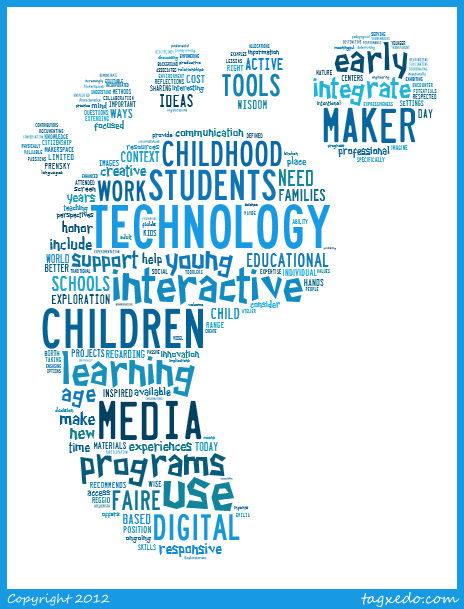
What does your classroom footprint look like?

The Calm Before the Storm

will return slowly sign

Upon returning from my vacation, I started to feel the anxiety building. I began to worry that a frantic storm of long hours of “catch-up” work were ahead. I started to fear that I had just experienced the “calm before the storm” by taking a vacation right before prep-work (orientations, meetings, etc) for the new school year was to officially begin (quickly followed by the first day of school!).

And then I stopped worrying. I started to think instead, about what I had learned while away and disconnected from technology and my work. I remembered the days of patiently watching waves, simply enjoying the sound of them cascading onto the beach. I thought of how lucky I felt to experience the care and compassion of family members who I rarely see. Then, I reflected on the power of patience and compassion, with and for ourselves and our fellow educators (and students). I realized that just because I had created a forced-calm by walking away from my devices and connecting with family and friends for a week, that did not mean that the calm had to immediately disappear. I could actually ease into things and be compassionate with myself by allowing time to readjust to a non-vacation schedule, time to get “back in the groove” of digital connectivity, and more time to reflect on what I had learned while away (and what I want for the upcoming school year).

I was surprised by how freeing this mindfulness of the need for compassion, patience, and multiple forms of connectivity (e.g., digital, personal, familial) felt. Which made me begin to think more about the applications of these traits and ideas for the classroom and the field of education. Have we placed enough emphasis on these “basic traits” when working with our students and colleagues? I know that to some, “compassion” and “patience” may feel like character traits that don’t have to be addressed after the early years but in our increasingly connected world, I wonder if we should highlight them more, regardless of age.

I think it could be beneficial for educators to remind one another to be patient and compassionate with themselves, especially as pressure builds with the start of a new school year. This feels particularly timely given that it’s Connected Educator’s Month. In addition to focusing on ways we can connect globally for collaboration and learning, we should focus on ways we can use our networks to support one another in being mindful of how much pressure we are putting on ourselves to set up the perfect classroom, prepare the “right” lessons, and create the ideal classroom community. I would love to see educators brainstorming ideas to help themselves and their students be patient and compassionate in their learning and communications, even if that means sometimes taking time to disconnect so they can reflect and relax.

How are you feeling about the start of the new school year? Have you connected with a supportive network of educators who can remind you to be patient and compassionate? Any tips you can share?